

 By
By In today’s interconnected world, international trade serves as the backbone of economic growth and global commerce. Every day, millions of goods travel across oceans, connecting manufacturers, suppliers, and consumers from different corners of the world. At the heart of this vast logistics network are global container terminals, which play a critical role in ensuring the seamless movement of cargo across international markets.
The Gateway to Global Commerce
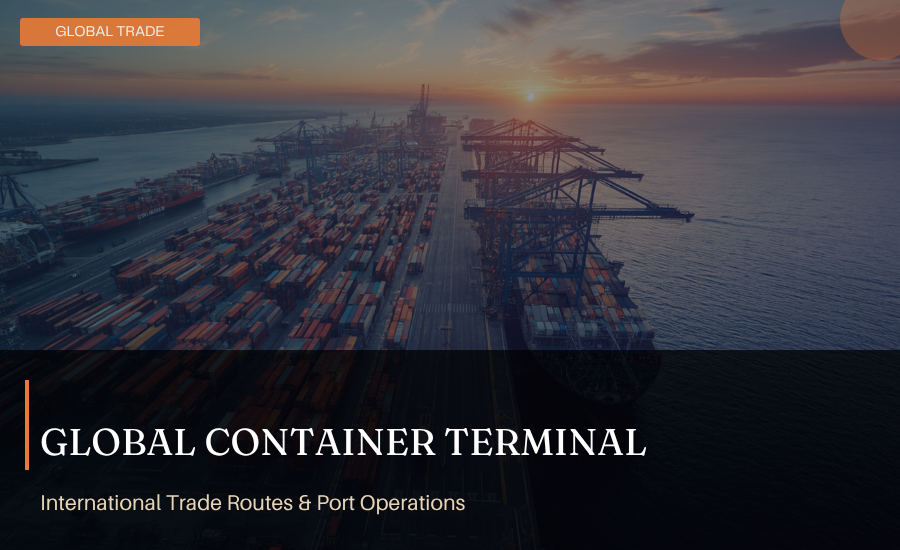
Global Container Terminals are specialized facilities designed to handle, store, and transfer containerized cargo between ships, trucks, and rail networks. These terminals act as strategic gateways that connect global supply chains, enabling businesses to import and export goods efficiently.
As international trade volumes continue to rise, the demand for advanced container handling infrastructure has grown significantly. Modern terminals are equipped with sophisticated technologies, automated equipment, and streamlined operational processes that help reduce transit times and improve cargo visibility.
Enhancing Supply Chain Efficiency
One of the primary contributions of Global Container Terminals is their ability to enhance supply chain efficiency. By facilitating quick loading and unloading of containers, terminals minimize vessel turnaround times and reduce congestion at ports. This operational efficiency translates into faster delivery schedules and lower logistics costs for businesses.
Furthermore, many terminals are integrated with rail and road transportation networks, allowing cargo to move smoothly from ports to inland destinations. This connectivity is essential for maintaining uninterrupted trade flows and meeting the growing demands of global markets.
Supporting Economic Growth
Global Container Terminals contribute significantly to local and national economies. They create employment opportunities across various sectors, including transportation, warehousing, customs clearance, and logistics management. Additionally, efficient terminal operations attract international shipping lines and investors, strengthening a country’s position in global trade.
For export-driven economies, well-developed container terminals provide businesses with reliable access to international markets. This accessibility enables manufacturers to expand their customer base, increase production capacity, and contribute to economic development.
The Importance of a Container Freight Station
While container terminals handle the movement of cargo at ports, a container freight station plays an equally important role in the logistics chain. A container freight station serves as a facility where cargo is consolidated, deconsolidated, inspected, and prepared for transportation.
These facilities help streamline customs procedures and ensure that shipments are properly documented before reaching their final destinations. By reducing bottlenecks and improving cargo handling efficiency, a container freight station supports smoother trade operations and enhances overall supply chain performance.
The collaboration between Global Container Terminals and container freight stations creates a well-coordinated logistics ecosystem that benefits importers, exporters, and shipping companies alike.
Technology Driving the Future
The logistics industry is undergoing rapid digital transformation, and Global Container Terminals are at the forefront of this evolution. Advanced technologies such as artificial intelligence, Internet of Things (IoT) sensors, automated cranes, and real-time tracking systems are revolutionizing terminal operations.
These innovations improve operational accuracy, increase cargo security, and provide stakeholders with greater transparency throughout the shipping process. As a result, businesses can make more informed decisions and respond quickly to changing market demands.
Sustainability in Maritime Logistics
Environmental sustainability has become a key priority for the shipping and logistics industry. Many Global Container Terminals are investing in green technologies, energy-efficient equipment, and carbon reduction initiatives to minimize their environmental impact.
From electrified cargo-handling machinery to renewable energy adoption, these efforts support cleaner and more sustainable international trade practices. Sustainable terminal operations not only benefit the environment but also help companies meet evolving regulatory requirements and corporate sustainability goals.
Conclusion
As global trade continues to expand, the importance of global Container Terminals cannot be overstated. These critical logistics hubs facilitate efficient cargo movement, strengthen supply chains, support economic growth, and drive innovation across the maritime industry. Together with a well-functioning container freight station, they create a robust infrastructure that enables businesses to compete successfully in the global marketplace.
In an era where speed, efficiency, and reliability are essential, Global Container Terminals remain indispensable pillars of international trade, ensuring that goods reach markets around the world seamlessly and efficiently.